


Breast Restoration After Surgery: Understanding Scars, Skin and Areola Options

Updated: Sep 3

Surgery can change more than the shape of the breast. A scar may remain noticeable after the incision has healed. Skin may feel different. Areola color or definition may have changed. Even when surgery has achieved its medical or cosmetic purpose, a person may still have questions about these visible details.
Breast restoration is personal. For some, it follows a mastectomy and reconstruction. For others, it follows a breast reduction, augmentation, lift or revision.
Understanding the available options begins with recognizing what has changed, how the tissue has healed and what matters most to the person considering care.
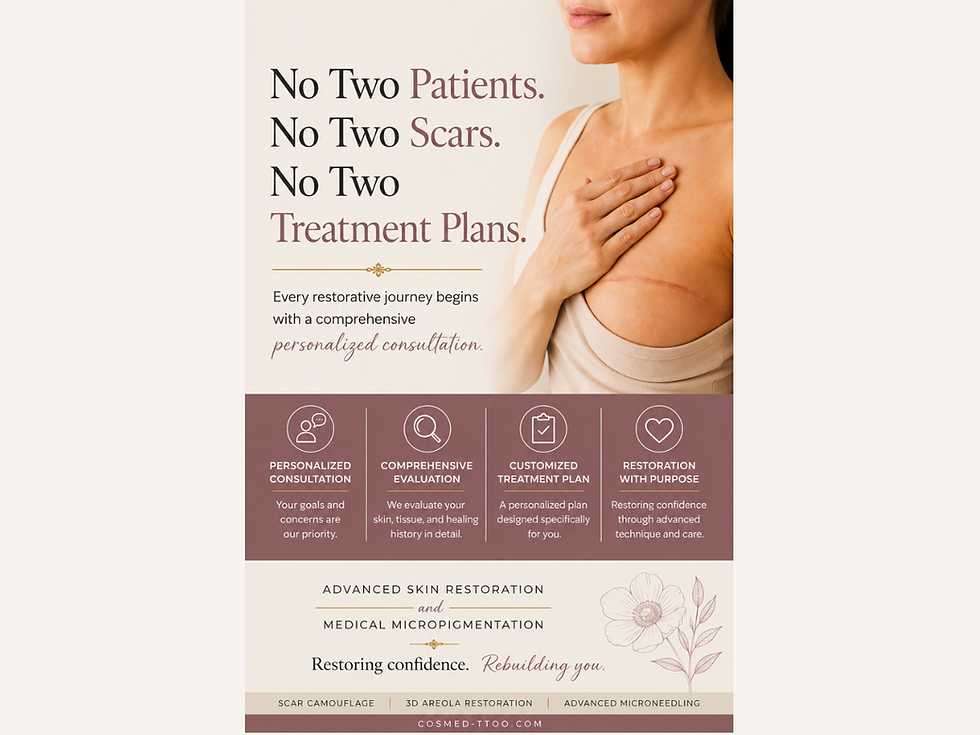
At COSMED-TTOO in Round Rock, serving the Austin area, that conversation begins with an in-person consultation and an individualized assessment designed to identify the most appropriate restorative options for each person.
Breast Restoration Across Different Surgical Journeys
After breast surgery, changes may remain in skin texture, scar color, symmetry or areola appearance.
The reasons for seeking restorative care are equally varied.
One person may want a pale scar to blend more naturally with surrounding skin, while another may want to recreate the visual appearance of an areola after reconstruction.
Each of these goals deserve thoughtful attention regardless of why surgery took place. A personalized restoration plan should reflect the individual's tissue, surgical history, readiness and expectations and personal choices.
First, Understand What You Want to Address
Color and texture are different concerns. A flat, lighter scar is not the same as a dark mark, a raised scar or an area that feels tight or uncomfortable. Each may require a different approach, and some concerns need evaluation by a surgeon or dermatologist before aesthetic treatment is considered.
During a consultation, useful questions include:
Is the concern primarily color, texture, areola definition or a combination?
Is the area fully healed and stable, or is it still changing?
Has there been radiation, revision surgery or a healing complication?
What improvement would feel meaningful and realistic?
Changes such as a new lump, persistent pain, warmth, drainage or an opening in the skin should first be evaluated by a qualified medical clinician before restorative care is considered.
How Advanced Microneedling May Support Scar Restoration
Advanced Microneedling creates controlled microchannels that encourage the skin's natural renewal response. For appropriately healed surgical scars, it may support improvements in skin texture and overall tissue quality. It may also be considered as part of tissue preparation before medical micropigmentation when the condition of the scar indicates that preparation could be beneficial.
Every scar requires individualized consideration. Scar maturity, tissue condition, surgical history and previous treatments all guide the recommendation.
During the in-person consultation, these factors are evaluated to determine the most appropriate restorative approach and the role Advanced Microneedling may have within a personalized plan.
Gentle skin care, avoiding further injury and following the treating clinician's guidance also matter between appointments.
Understanding The Role of Scar Camouflage
Scar camouflage uses medical micropigmentation to place pigment in selected areas, with the goal of reducing visible contrast between a scar and the surrounding skin. It may be considered for mature, stable, lighter-colored scars following an individualized assessment.
Scar Camouflage is designed specifically to address differences in color. Concerns involving raised scars, tight tissue, skin structure or darker discoloration may benefit from other restorative or medical approaches before pigmentation is considered.
Color matching, skin tone, scar characteristics and changes with sun exposure all influence the planning process. Pigment testing helps guide color selection and supports a thoughtful approach toward a natural, harmonious result that blends more comfortably with the surrounding skin.
Understanding 3D Areola Restoration
3D Areola Restoration uses pigment, shading and visual detail to recreate the appearance of an areola and provide the illusion of dimension on the skin. The effect is visual while the existing tissue determines physical contour and sensation.
Planning considers the breast contour, existing anatomy, placement, color and visual balance. Restoration may be unilateral or bilateral, depending on the person's needs. Previous tattooing, revision surgery and other tissue changes are carefully considered during the individualized assessment.
Natural-looking results involve more than selecting a color. Measurements, tissue condition, symmetry and realistic expectations all contribute to a thoughtful restoration plan.
When Is the Right Time to Begin?
An incision that appears closed may still be progressing through deeper stages of healing. Scar maturation can continue for many months, and readiness is best determined through an evaluation of the tissue rather than by the calendar alone. Timing depends on healing progress, planned revisions, radiation or other treatments, and the restorative procedure being considered. Guidance or clearance from the surgical or oncology team may also be appropriate. Allowing the tissue to become stable helps protect the skin and supports thoughtful restorative results.
Choosing a Restorative Specialist
Look for a specialist who clearly explains the restorative possibilities, the expected process and factors that influence and individualized recommendation. Ask about training, experience with similar tissue, healed results, infection-control practices, pigment testing when appropriate, aftercare. A thoughtful consultation should welcome questions and help you understand the recommended approach, timing, available options and when additional medical evaluation may be appropriate.
Your Next Step Begins with a Conversation
At COSMED-TTOO, each restoration plan combines personalized care, artistic attention and a healthcare-informed understanding of surgical tissue. Supported by more than 25 years of surgical healthcare experience. Our focus includes advanced microneedling, scar camouflage, medical micropigmentation and 3D areola restoration, with recommendations guided by the individual assessment.
If you are exploring options after breast surgery, a free in-person consultation offers a place to discuss your concerns and understand possible next steps without pressure to begin treatment.
Schedule a free consultation with COSMED-TTOO in Round Rock, serving the Austin area.
Educational information only.
Treatment suitability and timing depend on an individual consultation and, when appropriate, medical clearance. Results may vary
save to Pinterest



Comments